Omega-3 Supplementation Decreases Malondialdehyde, Vascular Endothelial Growth Factor Expression, Tumor Necrosis Factor Alpha, and Vascular Tuft in Oxygen-Induced Retinopathy
Doi: 10.36351/pjo.v42i1.2074
DOI:
https://doi.org/10.36351/pjo.v42i1.2074Abstract
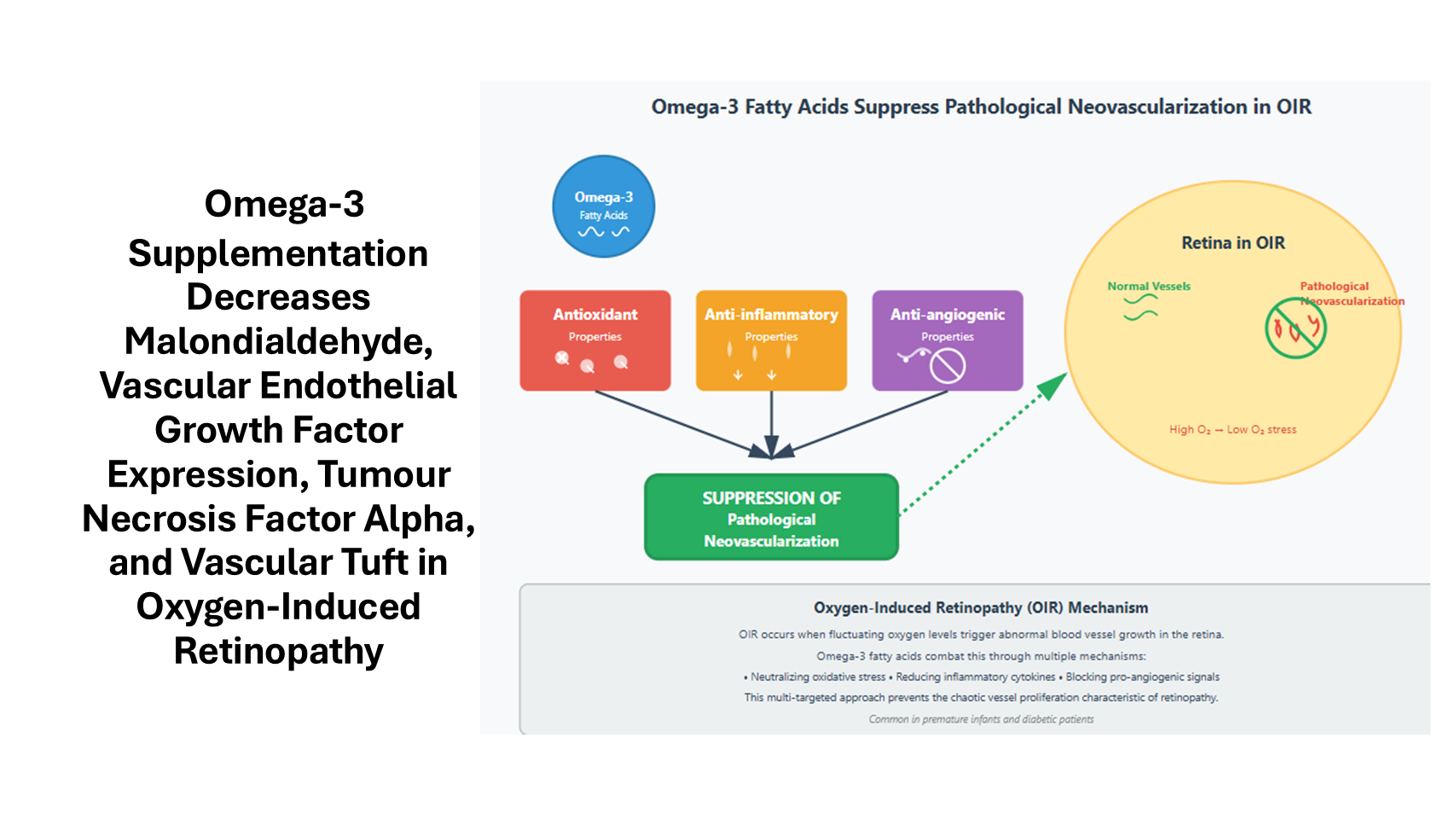
Purpose: To determine whether omega-3 supplementation can reduce malondialdehyde (MDA) levels, vascular endothelial growth factor (VEGF) expression, tumor necrosis factor-alpha (TNF-α) expression, and vascular tuft formation in oxygen-induced retinopathy (OIR) mouse models.
Study Design: Controlled laboratory experimental study.
Place and Duration of Study: Animal Laboratory Unit (ALU), Faculty of Medicine, Udayana University, from
Methods: Thirty-six male Sprague Dawley rats, aged one week and weighing 10–12 g were included. Rats were exposed to 75 ± 5% oxygen from postnatal day 7 (P7) to P12 in a sealed oxygen chamber to induce vaso-obliteration. They were then returned to room air (20% oxygen) from P13 to P17 to allow hypoxia-driven pathological neovascularization. After that, rats were randomly assigned to either the treatment or control group. The treatment group received omega-3 fatty acids at a dose of 0.4 mg/g body weight, administered once daily via nasogastric tube from P13 to P17. Control animals did not receive supplementation and were maintained on standard laboratory diet.Retinas allocated for histological assessment were processed for immunohistochemical evaluation of VEGF, TNF-α, and vascular tuft formation.
Results: There was a statistically significant reduction in MDA levels, VEGF expression and TNF-α in the treatment group receiving omega-3 supplementation. The number of vascular tufts was notably lower following omega-3 administration, implying its potential to inhibit pathological angiogenesis.
Conclusion: Omega-3 unsaturated fatty acids exhibit antioxidant, anti-inflammatory, and anti-angiogenic properties that help suppress pathological neovascularization in oxygen-induced retinopathy (OIR).
Downloads
Published
How to Cite
Issue
Section
License
Copyright (c) 2025 I Wayan Eka Sutyawan, Sri Maliawan, I Made Bakta, I Nyoman Mantik Astawa, I Made Jawi, Ni Ketut Niti Susila, Ida Bagus Putra Manuaba, I Putu Gede Adiatmika

This work is licensed under a Creative Commons Attribution-NonCommercial 4.0 International License.