The Myopia Epidemic: Pathogenesis, Risk Factors, and a Call for National Action
Doi: 10.36351/pjo.v42i3.2506
DOI:
https://doi.org/10.36351/pjo.v42i3.2506Keywords:
Myopia, Atropine, Orthokeratology, Physical Activity, Eye Growth and DevelopmentAbstract
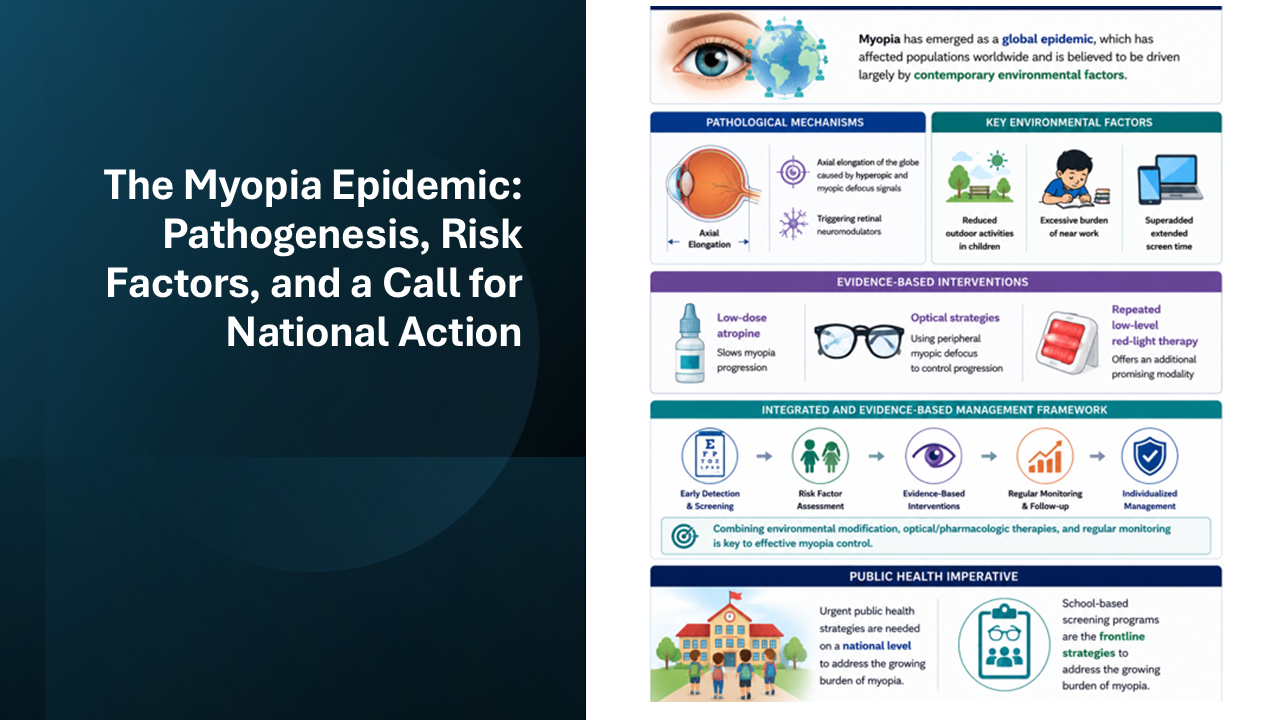
Myopia has emerged as a global epidemic, which has affected populations worldwide and is believed to be driven largely by contemporary environmental factors. Pathological mechanisms include axial elongation of the globe caused by hyperopic and myopic defocus signals along with triggering retinal neuromodulators. Key environmental factors include reduced outdoor activities in children, excessive burden of near work with superadded extended screen time. Recentevidenceshows that interventions like low-dose atropine and optical strategies using peripheral myopic defocus can reduce myopia progression. There are other modalities including repeated low-level red-light therapy which offersan additional promise. This editorial is focused on an integrated and evidence-based management framework for myopia control and advocates urgentpublic health strategies on national level. School-based screening programs are the frontline strategies to address the growing burden of myopia.
Downloads
Published
How to Cite
Issue
Section
License
Copyright (c) 2026 Mian Muhammad Shafique

This work is licensed under a Creative Commons Attribution-NonCommercial 4.0 International License.