Varied Ocular Manifestations of Wernicke Encephalopathy: A Case Report and Literature Review
Doi: 10.36351/pjo.v42i1.2133
DOI:
https://doi.org/10.36351/pjo.v42i1.2133Abstract
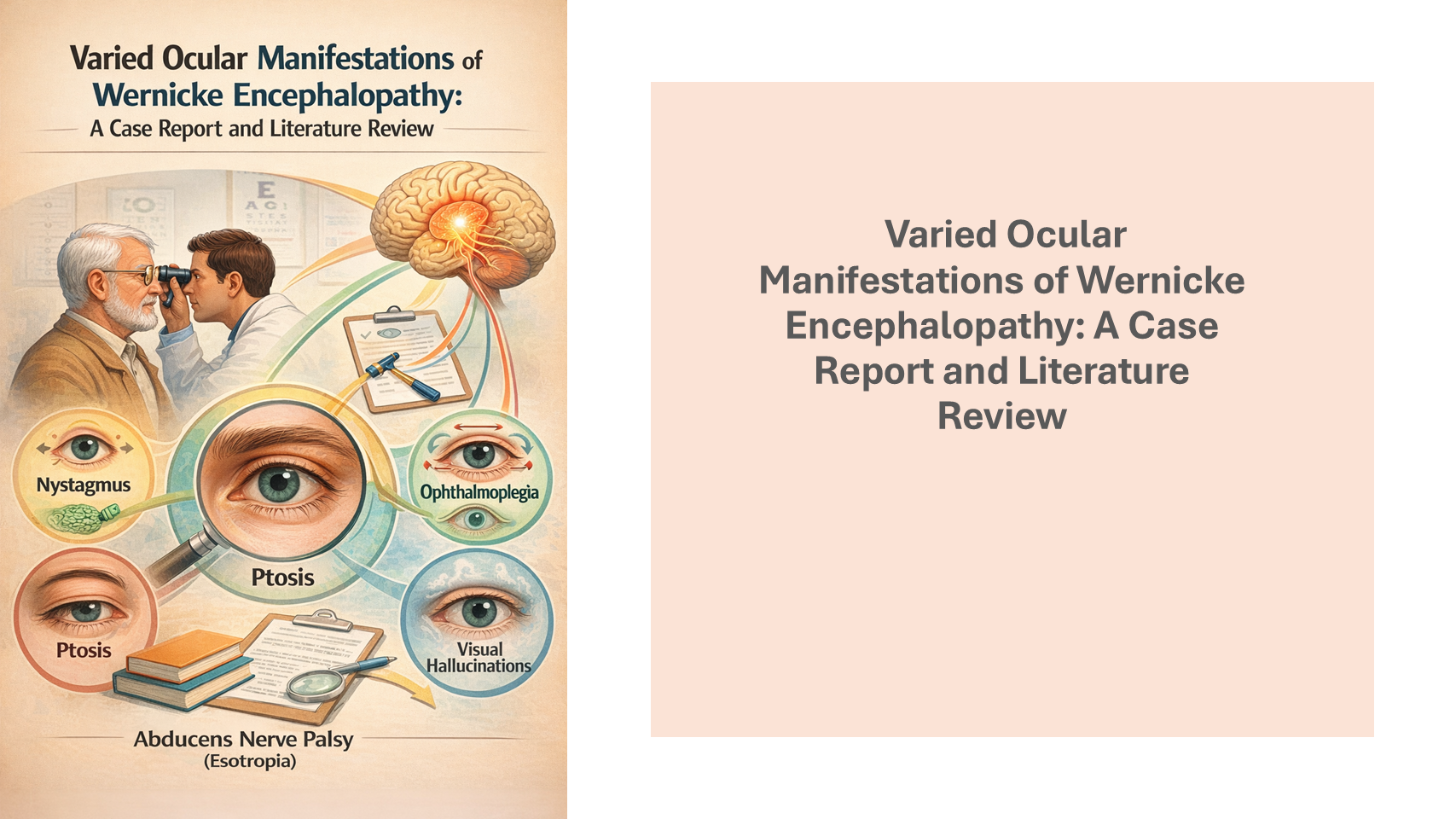
Wernicke encephalopathy (WE) is an acute neuropsychiatric syndrome resulting from thiamine deficiency. Though the classical triad of confusion, ataxia, and ophthalmoplegia is well-known, ocular presentations may be subtle or atypical.We report the case of a 49-year-old male admitted to the intensive care unit following an intra-abdominal leak post-Whipple procedure. He received total parenteral nutrition (TPN) for prolonged fasting. After a month, he developed bilateral visual blurring without pain or redness. Examination revealed horizontal gaze-evoked nystagmus, bilateral optic disc swelling, and peripapillary haemorrhages. Brain CT was normal, but neurological signs including ataxia and confusion emerged, prompting a clinical diagnosis of Wernicke encephalopathy. He received high-dose intravenous thiamine with subsequent improvement in vision and resolution of optic disc findings.Blurred vision may be an early ocular manifestation of Wernicke encephalopathy. This case highlights the need for high clinical suspicion and prompt thiamine supplementation in at-risk patients, even without full-blown encephalopathy.
Downloads
Published
How to Cite
Issue
Section
License
Copyright (c) 2025 Noor Atieqa Inani Shaharuddin, Tajunisah Iqbal, Sujaya Singh

This work is licensed under a Creative Commons Attribution-NonCommercial 4.0 International License.