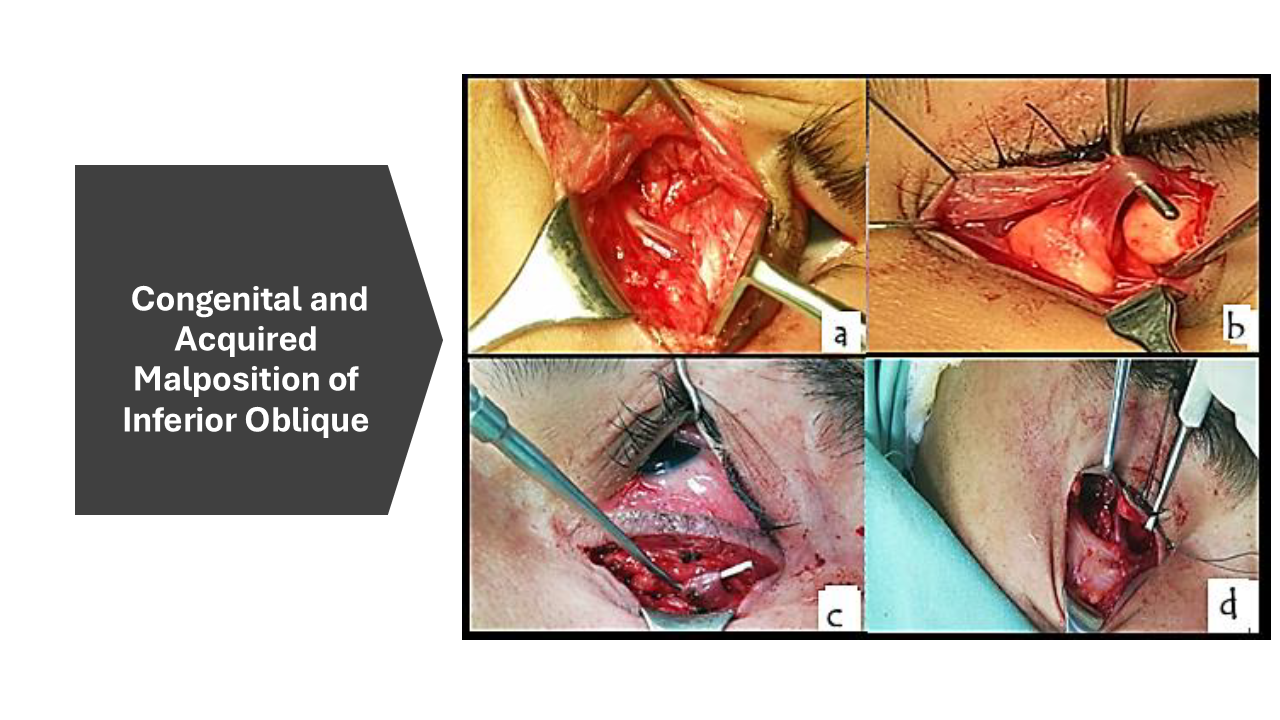
Congenital and Acquired Malposition of Inferior Oblique
Doi: 10.36351/pjo.v42i1.2130
DOI:
https://doi.org/10.36351/pjo.v42i1.2130Abstract
Purpose: o report and characterize malposition of the inferior oblique (IO) muscle observed during orbital surgeries for congenital and acquired pathologies.
Study Design: Descriptive case series.
Place and Duration of Study: Al- Shifa Trust Eye Hospital, Rawalpindi from June 2004 to June 2024.
Methods: In this study, all the patients who underwent orbital surgery during the 20 years, by one experienced orbital surgeon, were reviewed. Out of 1200 cases of orbital surgeries four cases were identified for the study. In all four cases, IO mal position was directly observed during orbital surgery. Pre-operative orbital imaging studies could not find the malposition. All surgeries were performed by the same surgeon under general anesthesia. In addition to the planned surgical procedure, an attempt was also made to re-position the abnormal-origin IO.
Results: Out of the four patients with IO malposition, there were two females and two males. Two patients presenting with congenital dermoid cysts had a normal birth history with no history of any surgery or trauma. The other two patients with acquired malposition had a history of trauma and previous surgery.
Conclusion: IO malposition is a rare entity. It is difficult to predict pre-operatively so while performing orbitalor strabismus surgeries, one should be very careful and watchful to prevent damage to ectopic muscles.
Downloads
Published
How to Cite
Issue
Section
License
Copyright (c) 2025 Fariha Taimur, Tayyab Afghani, Amna Manzoor, Sumeya Ali Khan, Faizan Tahir

This work is licensed under a Creative Commons Attribution-NonCommercial 4.0 International License.