Intralesional Bleomycin for Orbital Vascular Malformations at A Tertiary Care Centre
Doi: 10.36351/pjo.v42i1.1926
DOI:
https://doi.org/10.36351/pjo.v42i1.1926Abstract
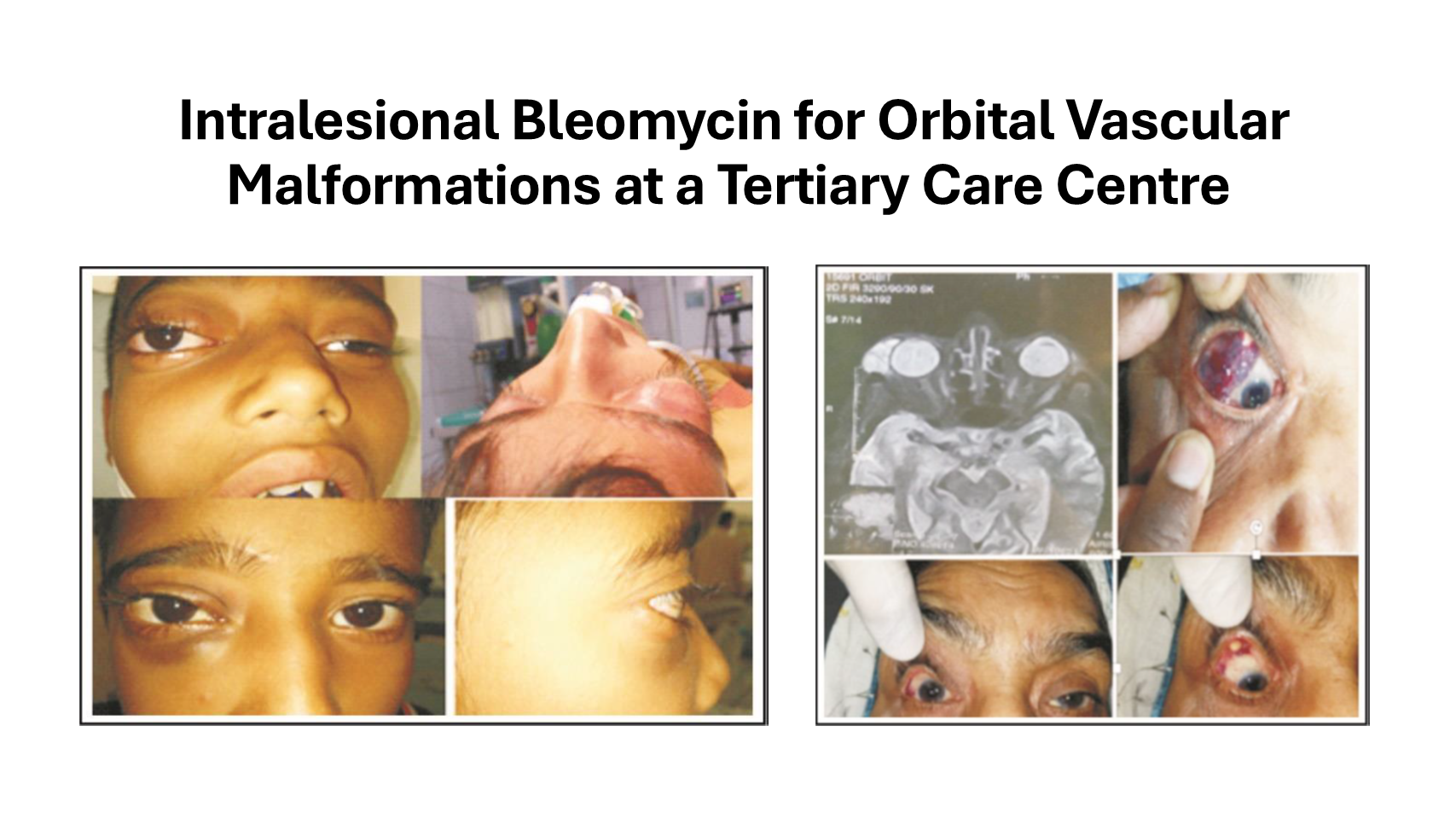
Purpose: To report the outcomes of intralesional bleomycin injections for orbital venous malformations (OVMs) in a tertiary care setting.
Study Design: Interventional case series.
Place and Duration of Study: Jinnah postgraduate medical Centre Karachi from January 2020to April 2022.
Methods: This case included 24 consecutive cases presenting with orbital vascular malformations, including orbital capillary hemangiomas, lymphangiomas, and orbital varices. The location, dimensions, extent of involvement, signal characteristics, and enhancement pattern following contrast administration of the lesion were determined. Intralesional bleomycin injections were given at a dose of 0.5 mg/kg body weight diluted in lidocaine. Retreatment if needed was done at an interval of 4 weeks. Follow up included measurement of proptosis and radiological measurements of tumor volume.
Results: Proptosis and lid swelling were the most common presentations. An average of 2.27±1.3 injections of bleomycin were given. The mean pretreatment volume was 3.61±1.14 cm3and the post-treatment volume was1.41±1.06 cm3 with a mean reduction in tumor volume of 2.20±1.13 cm3 (t=9.52, p<0.001). There was marked improvement in clinical symptoms and the proptosis reduction averaged 7.22±2.80 mm (t= 10.95, p<0.001). Side effects included conjunctival swelling, skin hyperpigmentation around the lesion, and madarosis.
Conclusion: Intralesional bleomycin injection proved to be an effective and minimally invasive treatment modality for orbital venous malformations, resulting in significant reduction in lesion volume and proptosis, along with marked symptomatic improvement. It is a valuable therapeutic option for orbital vascular malformations, particularly in cases where surgical excision is challenging.
Downloads
Published
How to Cite
Issue
Section
License
Copyright (c) 2025 Nasar Qamar Khan, Weijai Kumar Dembra, Rabia Khawar Chaudhry, Arifa Farooq , Amna Hanif

This work is licensed under a Creative Commons Attribution-NonCommercial 4.0 International License.